In March 2026, the Palm Springs City Council approved Class 1 landmark status for a 1930s estate tied to Hollywood director Edmond Goulding. The buyer, Lucien Wolff, told the council he'd purchased the property knowing it needed serious restoration work. After the vote passed, Mayor Naomi Soto turned to Planning Director Chris Hadwin and asked him to walk through what the city's Mills Act program actually costs and who benefits from it. It was a fair question, and one that most buyers touring a Class 1 home in Movie Colony never think to ask until after they've written an offer.
Here's what that council conversation exposed, and what it means if you're looking at a landmarked property in Movie Colony: the property tax discount and the renovation restrictions aren't two separate features of a historic home. They're the same contract. And when you buy a Class 1 house, you're either stepping into terms someone else already signed, or applying to sign your own. Either way, the deed comes with more attached than the sale price suggests.
The Discount and the Restriction Are the Same Instrument
California's Mills Act, passed in 1972, lets cities enter contracts with owners of qualified historic properties. The owner agrees to restore and maintain the home according to its historic character. In exchange, the city and county recalculate the property's assessed value using an income approach rather than standard market comparables, which can lower the tax bill substantially. Estimates put the savings as high as 70% off the pre-contract bill, though the real number moves on a sliding scale depending on the property and the market.
In Palm Springs, only Class 1 and Class 2 designated properties, plus contributing structures within a historic district, are eligible to apply. The contract runs ten years and renews automatically unless the owner or the city files notice to end it. It also transfers with a change of ownership, which means a buyer doesn't get to renegotiate the terms at closing. You take on whatever restoration and maintenance commitments the previous owner made, along with whatever tax basis came with them.
That's the trade. Lower taxes in exchange for a legal obligation to keep the house looking the way the city decided it should look when it granted the designation.
What Movie Colony Actually Has on the Books
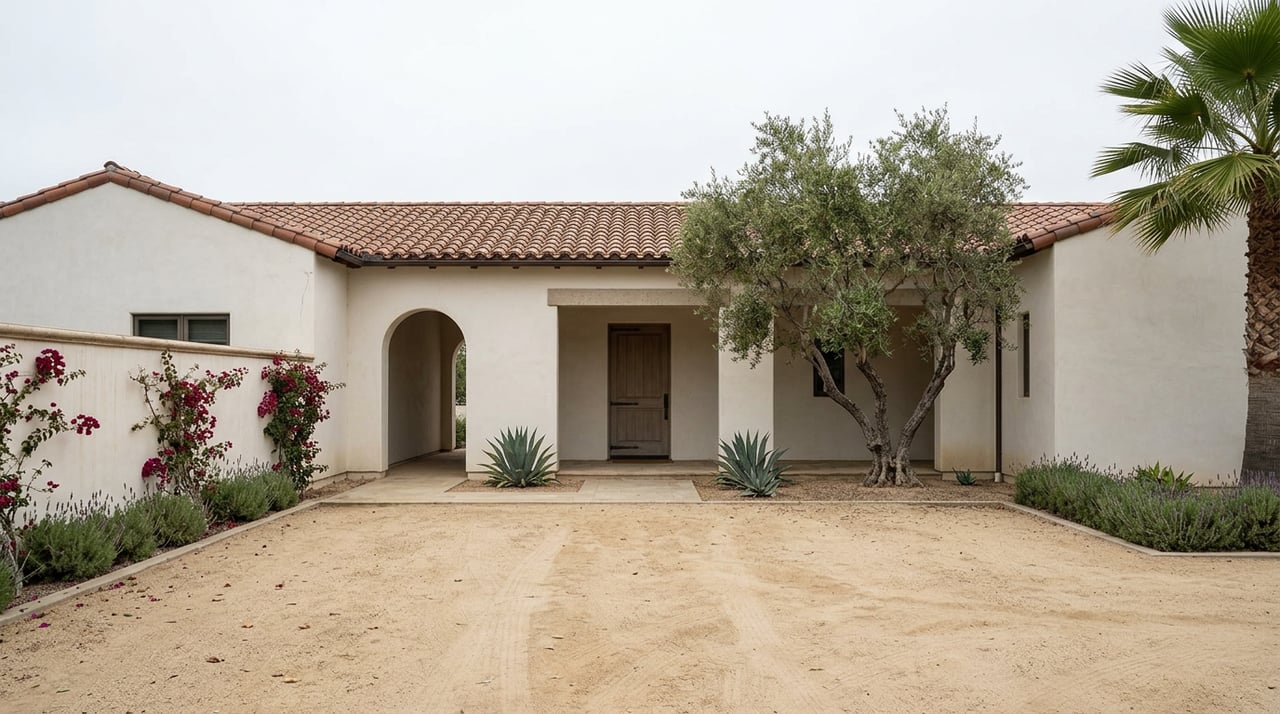
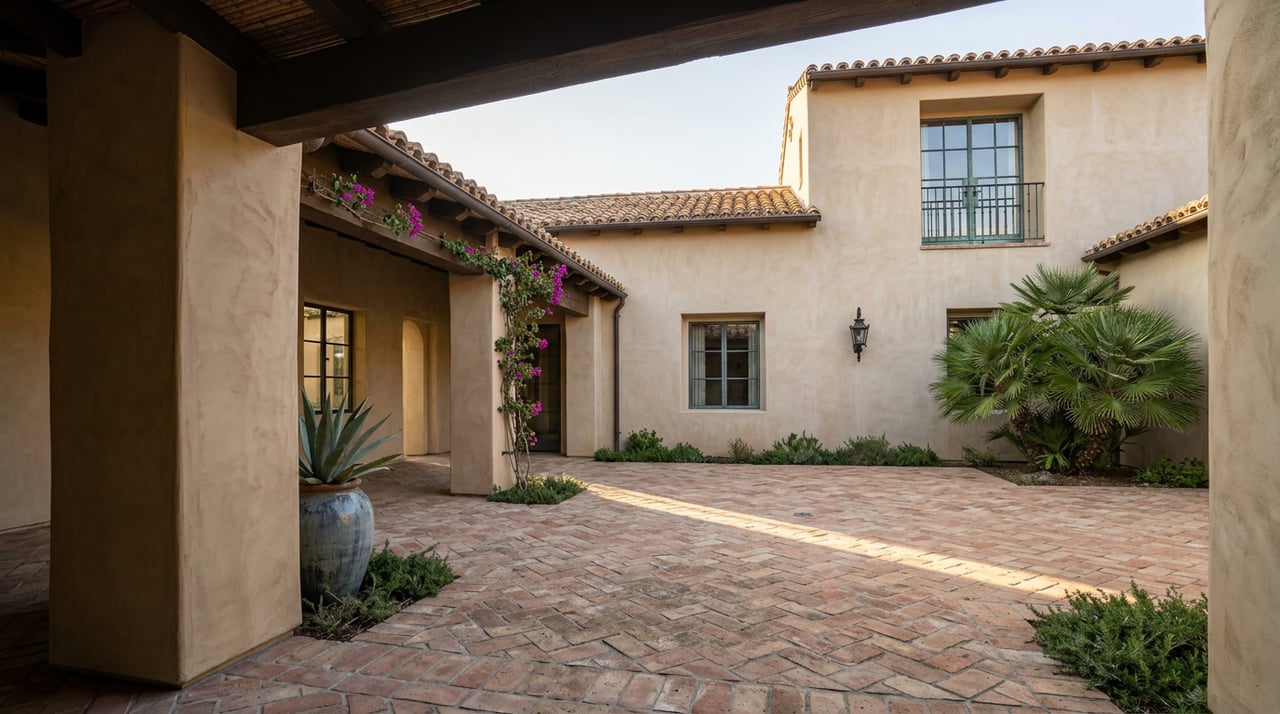
Movie Colony isn't a neighborhood with a handful of old houses that happen to look historic. It holds several homes the city has formally designated as Class 1 landmarks, each with its own resolution and its own set of protected features.
The Rachel de Brabant Residence at 982 North Avenida Palmas, an early Spanish Colonial Revival built in the 1920s, was designated Class 1 in 2010. A few doors away at 928 North Avenida Palmas sits Las Palomas, the Spanish Colonial Revival estate Cary Grant once called home, commissioned in 1927 by pharmacist Dr. Jacob John Kocher on roughly 1.5 acres. The Kramer Residence at 800 East Granvia Valmonte, a 1963 New Formalism design by architect James McNaughton, earned its Class 1 status in 2019 and later drew attention when Architectural Digest featured it as the setting for a 2017 DeÇaSo design dinner. And the James Logan Abernathy Residence at 611 North Phillips Road, a pavilion-style home designed by William Cody in 1962, rounds out the neighborhood's landmark roll.
Four confirmed Class 1 properties inside one neighborhood is not typical for Palm Springs. It's also why a buyer touring Movie Colony is more likely than almost anywhere else in the city to end up looking at a house where the Mills Act question isn't hypothetical.
What Changes Once the House Says Class 1
| Buying scenario | Property tax path | Renovation path |
|---|---|---|
| Class 1 home with an existing Mills Act contract | You inherit the current contract term and its assessed value | Any exterior alteration still needs a Certificate of Appropriateness, regardless of who owns the house |
| Class 1 home with no contract filed yet | You can apply for a new Mills Act contract after closing | Same Certificate of Appropriateness requirement applies whether or not you pursue the tax benefit |
| Older Movie Colony home without designation | Standard tax basis, no Mills Act discount available | No historic overlay review required for exterior work |
The middle row is where most buyers get surprised. A house can carry the Class 1 label and still not have an active Mills Act contract, either because a previous owner never applied or let it lapse. That means the renovation rules are already in force the moment the city designation was recorded, but the tax benefit is a separate application you'd need to file yourself after you own the place. The two don't arrive together automatically.
Interior Is Yours. The Facade Isn't.
City code spells out the review process clearly. Before any demolition or alteration to a Class 1 or Class 2 resource, the owner needs a Certificate of Appropriateness, and that approval has to happen before the city will even issue a standard building or zoning permit for the work. The review board looks at whether the proposed change would impair the "character-defining features" listed in the property's original designation resolution.
There are exceptions built in. Interior modifications don't require a Certificate of Appropriateness at all. Repainting is exempt too, as long as the new color matches what's already there or what existed historically. So a buyer planning to redo a kitchen or reconfigure a hallway inside a Movie Colony landmark has more freedom than the "historic home" label might suggest. The scrutiny is reserved for anything visible from the street, anything that touches the features the city named when it made the house a landmark in the first place.
Back in 2023, city planner Ken Lyon made a point of reminding local Realtors that age alone doesn't qualify a house. Age and a good story aren't the same thing as a resolution on file, he told the group, noting that a house being old, or having once hosted someone who was "on the silver screen," doesn't automatically make it historic under the ordinance. The paperwork is what matters, not the folklore.
The City Isn't Handing These Out Quickly
If your plan is to buy an older, undesignated home in Movie Colony and pursue Class 1 status yourself for the tax benefit, it helps to know the pace. As of mid-2026, Palm Springs had 133 total Class 1 designations citywide, with somewhere between 75 and 80 of those being residential homes. The city doesn't cap how many it will approve, but it processes roughly a dozen new designations a year.
The March 2026 council discussion added more context. Staff confirmed the city currently has 524 properties that are eligible for Mills Act consideration, but only 177 of those actually carry an active contract, with a small handful more moving through the application process at any given time. Eligibility and participation are two different numbers, and the gap between them is wide enough that a buyer betting on a fast turnaround from application to tax relief should plan for a longer runway than a single tax year.
Questions Worth Asking Before You Write the Offer
- Does this property already have an active Mills Act contract, and if so, what year does the current ten-year term expire?
- Has the seller filed any Certificates of Appropriateness for past work, and are copies available to review?
- If the house is Class 1 but has no Mills Act contract on file, has a new application ever been submitted or denied?
- What specific features are named as character-defining in the original designation resolution? That list determines what future exterior changes will face review.
A Few Straight Answers
Does the Mills Act discount apply automatically to every Class 1 home? No. Class 1 status makes a property eligible, but the tax benefit only kicks in once a Mills Act contract is filed and approved. A house can be a landmark for years without ever having one.
Can a new owner cancel an existing Mills Act contract after buying the house? The contract transfers with the sale and renews automatically. Ending it requires formal notice of non-renewal from either the owner or the city, and that doesn't happen instantly or without consequence to the assessed value.
Does landmark status limit what you can do inside the house? Generally no. Interior modifications are exempt from Certificate of Appropriateness review. The restrictions apply to exterior work and anything touching the features named in the designation.
Movie Colony's landmark homes carry real weight, both historically and financially, but that weight comes with terms that don't show up in a listing description. If you're looking at a Class 1 property in the neighborhood, or trying to figure out whether an older home nearby might be a candidate for one, Bernal Smith Group can walk through what's already on file for a specific address and what it would actually mean for you at closing. Contact us before you write the offer, not after.