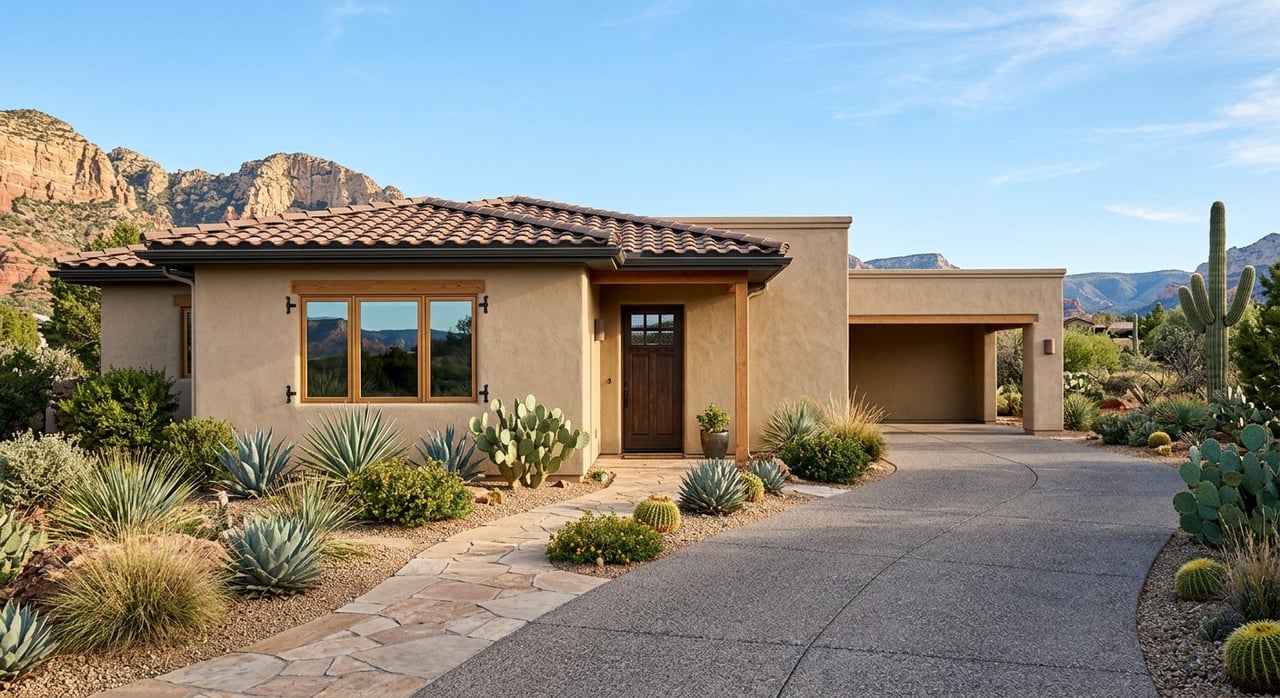
Trying to decide whether Palm Springs is worth the premium, or if Cathedral City gives you more for your money? You are not alone. Many buyers want the Coachella Valley lifestyle, but they also want a purchase that feels smart, flexible, and aligned with their budget. This comparison will help you see where Cathedral City stands out, where Palm Springs still commands more, and how to think about value before you make a move. Let’s dive in.
Price Gap: What Buyers Should Know
The clearest difference between Cathedral City and Palm Springs is price. Zillow’s April 30, 2026 home-value data shows Cathedral City at $484,056 and Palm Springs at $630,706. That is a gap of $146,650, or about 30.3%.
Realtor.com’s March 2026 median list prices point in the same direction. Cathedral City came in at $517,000, while Palm Springs reached $719,950. That is a difference of $202,950, or about 39.3%, which is meaningful if you are trying to balance monthly costs, cash reserves, or long-term flexibility.
Census QuickFacts also supports the same overall pattern. Median owner-occupied values were $453,100 in Cathedral City and $604,000 in Palm Springs. These numbers are measured differently than Zillow and Realtor.com data, but the broader message is consistent: Palm Springs carries a clear price premium.
Cathedral City’s Value Advantage
If your goal is to get into the Coachella Valley without stretching as far, Cathedral City stands out as the lower-cost entry point. That does not simply mean cheaper. It means you may have more room to prioritize features that matter to you, like square footage, layout, or a specific property type.
The market conditions also give buyers a little more breathing room. Realtor.com classified Cathedral City as a buyer’s market in March 2026, while Palm Springs was labeled a balanced market. For many buyers, that can translate into a more manageable search and potentially better negotiating conditions.
Days on market add another useful layer. Realtor.com reported a median of 63 days on market in Cathedral City versus 57 days in Palm Springs. Zillow’s snapshot showed Cathedral City homes going pending in about 35 days and Palm Springs in about 39 days, which suggests both markets are active, but Cathedral City still reads as the more forgiving option overall.
Palm Springs Premium: What You Are Paying For
Palm Springs is more expensive, but buyers are not paying that premium by accident. The city has a stronger destination identity, a well-known architecture and resort reputation, and a broader range of premium submarkets. If that brand, atmosphere, and recognition matter to you, Palm Springs may still feel worth the extra cost.
The neighborhood pricing spread helps explain this. In Palm Springs, Realtor.com shows markets ranging from Baristo at $419,000 to Little Tuscany at $1,375,000, with places like Midtown Palm Springs at $489,450 and Escena at $1,299,000. That range reflects a more segmented market, with entry points in some areas and strong premiums in others.
Cathedral City has variation too, but the numbers tend to cluster lower. Realtor.com shows Palm Springs Panorama at $599,000, Rancho Ramon at $552,000, and Tapestry at $527,450. For buyers focused on value, that can make Cathedral City easier to navigate from a budgeting standpoint.
Housing Options in Both Cities
Both cities offer more than one kind of housing. Palm Springs planning documents describe support for single-family homes, apartments, townhomes, mobile homes, special-needs housing, smaller courtyard or small-lot developments, hotel conversions, and microhomes. Its land-use framework includes detached and attached homes, duplexes, townhomes, multifamily, and mobile-home projects.
Cathedral City also has a broad residential mix. Its 2040 General Plan and Housing Element state that about 6,558 acres, or roughly 50% of the city’s land inventory, is designated for a range of residential densities, including estate, low-density, resort residential, medium, medium-high, high-density, and mixed-use neighborhoods.
Cathedral City also identifies affordability-restricted multifamily properties, affordability-assisted single-family properties, and mobile-home information as part of its housing resources. For you as a buyer, the practical takeaway is simple: both cities offer condos and single-family homes, but Cathedral City tends to present more value-oriented choices, while Palm Springs tends to feel more premium and more segmented.
Commute and Access Across the Valley
For many buyers, value is not just about purchase price. It is also about how easily you can move around the valley for work, errands, travel, and day-to-day life. On that front, both cities are well connected.
Census QuickFacts show a mean travel time to work of 19.9 minutes in Cathedral City and 22.2 minutes in Palm Springs. That is not a dramatic gap, but Cathedral City comes in slightly lower. If you are thinking about practical daily use, that small difference may still matter.
Regional commute data suggests the two cities function as part of one interconnected market. Cathedral City residents commonly work in Palm Springs, Cathedral City, Palm Desert, and Rancho Mirage. Palm Springs residents most often work in Palm Springs itself, then Rancho Mirage, Palm Desert, and Cathedral City.
Transit and road access also support flexibility. SunLine Route 2 runs between Palm Springs and Cathedral City, and SunRide microtransit is available in both cities. Cathedral City notes direct access to Highway 111 and Interstate 10, while Palm Springs also identifies I-10 and Highway 111 as primary routes. Palm Springs International Airport is about two miles from downtown and serves Palm Springs and the broader Coachella Valley.
Lifestyle Trade-Offs to Consider
Palm Springs and Cathedral City offer different kinds of value. Palm Springs brings the stronger tourism, culture, and destination identity. Visit Greater Palm Springs highlights places like the Agua Caliente Cultural Plaza, the Palm Springs Art Museum, the Palm Springs Aerial Tramway, downtown Palm Springs, and more than 400 individually owned-and-operated places to play, stay, dine, and shop.
Cathedral City leans more into practical livability. The city highlights shopping along Perez Road and Highway 111, home-furnishings and vintage retail, recognizable stores such as Target and Trader Joe’s, and annual events including the Hot Air Balloon Festival, Cathedral City LGBT+ Days, Tastes & Sounds of Cathedral City, and the Taste of Jalisco Festival.
That difference matters because value is personal. If you want a stronger resort identity and a more destination-oriented feel, Palm Springs may justify the premium. If you want everyday convenience, local services, and a lower price point, Cathedral City can be a very compelling fit.
How Each City Feels Day to Day
Census data offers a few clues about the day-to-day feel of each city. Cathedral City’s 2020-2024 ACS profile shows 19.0% of residents are age 65 or older, compared with 35.3% in Palm Springs. Palm Springs also has a smaller average household size, at 1.8 people versus 2.73 in Cathedral City.
These figures suggest different living patterns. Palm Springs may feel more tied to retiree and second-home lifestyles, while Cathedral City may feel more oriented toward full-time households and everyday residential use. That does not make one better than the other, but it can help you think more clearly about fit.
The physical footprint is different too. Palm Springs covers 94.55 square miles with 471.5 people per square mile, while Cathedral City spans 22.49 square miles with 2,289.2 people per square mile. Some buyers prefer Cathedral City’s more compact layout, while others are drawn to Palm Springs’ larger footprint and distinct submarkets.
Which City Offers Better Value?
If you are budget-conscious, Cathedral City is the stronger value play based on current pricing and market conditions. You can stay in the same general valley ecosystem, keep access to transit and major roadways, and often spend significantly less than you would in Palm Springs. For many buyers, that trade-off makes a lot of sense.
If you are drawn to Palm Springs for its brand, cultural profile, airport convenience, and iconic market identity, the premium may still be worth it. The right decision depends on what kind of value matters most to you. Some buyers want the strongest lifestyle branding, while others want more house for the money and a purchase that leaves room for future flexibility.
A practical way to think about it is this:
- Choose Cathedral City if you want a lower-cost entry point, more budget flexibility, and a practical everyday living base in the Coachella Valley.
- Choose Palm Springs if you want a stronger destination identity, a broader premium market, and are comfortable paying more for that positioning.
A Smart Buying Strategy
If you are comparing these two markets, it helps to look beyond city names and focus on your actual goals. Ask yourself how you plan to use the home, how often you will be in the property, what kind of location rhythm fits your life, and how much price flexibility you want after closing.
This is especially important in the Coachella Valley, where condos and single-family homes can vary widely by location, ownership structure, and overall lifestyle fit. A clear strategy can help you avoid overpaying for branding alone or overlooking a city that may offer stronger long-term value for your needs.
At Bernal Smith Group, we help buyers compare options across Palm Springs, Cathedral City, and the broader valley with a practical, responsive approach. Whether you are buying from out of area, planning a relocation, or narrowing down condos versus single-family homes, we can help you weigh lifestyle, pricing, and negotiation strategy with clarity. When you are ready to explore your options, reach out to Bernal Smith Group.
FAQs
Is Cathedral City cheaper than Palm Springs for home buyers?
- Yes. Current data in the research report shows Cathedral City home values and median list prices are notably lower than Palm Springs, making it the lower-cost entry point.
Is Cathedral City a buyer’s market or a seller’s market?
- Realtor.com classified Cathedral City as a buyer’s market in March 2026.
Does Palm Springs offer more amenities than Cathedral City?
- Palm Springs has a stronger tourism and culture profile, while Cathedral City emphasizes practical daily amenities, shopping access, and local events.
Are Cathedral City and Palm Springs both good for commuting around the Coachella Valley?
- Yes. Research in the report shows both cities are well connected through Highway 111, Interstate 10 access, transit options, and an interlinked regional job market.
What types of homes can you buy in Cathedral City and Palm Springs?
- Both cities offer a mix of housing types, including single-family homes and condos, along with other residential formats identified in their planning documents.
Is Palm Springs worth the higher price for some buyers?
- Yes. Buyers who prioritize Palm Springs’ destination identity, arts access, airport convenience, and premium neighborhood branding may decide the higher price is worth it.